
Preparing for Kilimanjaro: What Actually Matters
August 16, 2026 · Oxpecker Tours
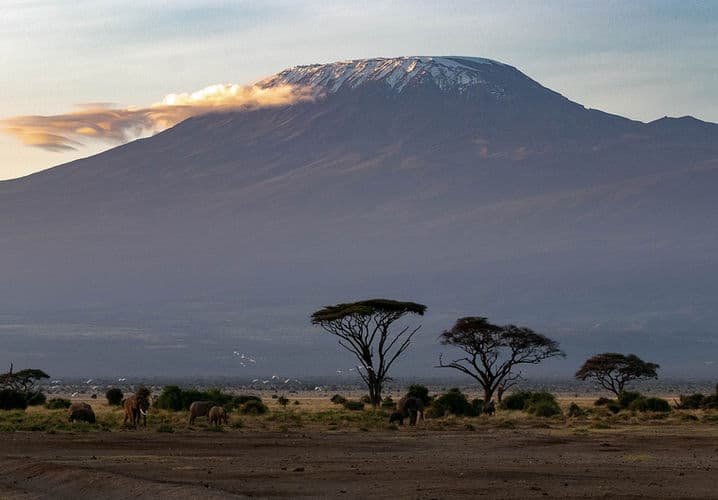
Roughly 30,000 people attempt Kilimanjaro each year, and depending on whose numbers you trust, somewhere between 45% and 65% reach Uhuru Peak. The gap between those who summit and those who don't has surprisingly little to do with fitness, and almost everything to do with decisions made before the climb starts.
Here's what actually matters, in order.
1. Route choice — the single biggest factor
Summit success varies enormously by route, almost entirely because of how much time each allows for acclimatisation.
Marangu (5–6 days) — the "Coca-Cola route", the only one with hut accommodation. Also has among the lowest success rates, because five days is not enough to acclimatise. Its reputation as the "easy" route is actively misleading.
Machame (6–7 days) — steeper walking, but a much better acclimatisation profile thanks to its climb-high-sleep-low structure. Popular and busy, but the extra day makes a real difference.
Lemosho (7–8 days) — longer, quieter approach from the west. High success rates. Our usual recommendation for anyone who can afford the extra days.
Rongai (6–7 days) — approaches from the drier north. Good option in the wet season, less crowded.
Umbwe (5–6 days) — steep, direct, and genuinely difficult. For experienced trekkers only.
If you take one thing from this article: pay for the extra day. The cost difference between a 6-day and 8-day climb is small relative to the total, and the difference in your chance of summiting is large.
2. Pace — pole pole is not a slogan
Your guides will say pole pole ("slowly, slowly") constantly. It sounds like a charming local phrase. It's actually the core technical instruction of the entire climb.
Walking slowly allows your body to produce the extra red blood cells needed at altitude. Fit, competitive people are at genuine disadvantage here, because their instinct is to push, and pushing at altitude is how you end up descending on day four.
You should be walking slowly enough to hold a conversation comfortably. If you're breathing hard, you're going too fast — regardless of how easy the terrain feels.
3. Altitude — know the actual signs
Uhuru Peak is 5,895m. Oxygen availability there is roughly half of what it is at sea level. Some degree of altitude sickness is normal and manageable; some is not, and telling them apart matters.
Normal and manageable: mild headache, some breathlessness, poor sleep, reduced appetite, mild nausea.
Descend immediately: confusion or altered behaviour, loss of coordination (unable to walk a straight line), breathlessness at rest, a persistent cough with frothy sputum, severe headache that doesn't respond to painkillers.
The second list describes HACE and HAPE. Both are life-threatening and both are treated the same way: go down, immediately, regardless of how much the climb cost.
Be honest with your guides about how you feel. Good guides are watching for this constantly, but they can't see inside your head. Understating symptoms to avoid disappointing anyone is how people get seriously hurt.
On Diamox: many climbers use acetazolamide to assist acclimatisation. It works, and it's widely prescribed for this purpose. Talk to your own doctor — we're guides, not physicians, and we won't advise on medication.
4. Fitness — necessary, not sufficient
You need reasonable cardiovascular fitness and legs that will tolerate consecutive days of walking. You do not need to be an athlete, and being one won't save you if you ascend too fast.
Useful preparation, in rough order:
- Long walks on consecutive days, ideally with a daypack. Back-to-back matters more than any single hard session.
- Hills, up and down. Descent does more damage to knees than ascent and is widely under-trained.
- Time in your actual boots. Blisters end more climbs than altitude does.
Summit night is the hard part: a midnight start, six to seven hours of walking in the cold and dark to reach the crater rim near sunrise, then a long descent. Nothing at sea level fully prepares you for it, but tired-leg training gets closest.
5. Kit — the short version
Full lists are everywhere. The things people actually get wrong:
- Boots that aren't broken in. Non-negotiable.
- No proper insulated jacket. Summit night can hit −20°C with wind. Underestimating this is common.
- Cotton. It holds sweat, and wet clothing at altitude is dangerous. Synthetic or merino throughout.
- Not enough water capacity. Three litres minimum, and drink it. Dehydration mimics and worsens altitude sickness.
- No headtorch spare batteries. Summit night is entirely in the dark, and cold kills batteries fast.
You can rent most heavy items in Moshi or Arusha, which is worth knowing if you're not planning to climb again.
6. Choose your operator on the right criteria
This one matters ethically as well as practically. Kilimanjaro runs on porters, and how they're treated varies enormously between operators.
Ask directly: what are porters paid, what weight do they carry, what do they sleep in, are they insured? Operators who treat porters properly generally run better climbs, because experienced crew stay with them.
The cheapest quote is almost always cheap because of what's cut from the crew's side.
Kilimanjaro is a non-technical climb. You don't need ropes, ice axes, or mountaineering experience. What you need is enough days, a slow pace, and the honesty to turn around if your body tells you to.
If you'd like to talk through routes and timings, get in touch — we'll give you a straight answer about what's realistic for your fitness and schedule, including saying so if the days you have aren't enough.